


Most first-time buyers do best with 18 to 20 inches, and 18 inches is the safest bet if you’re choosing blind. The single rule that prevents a bad order: measure your natural hair from just above the nape to the ends, add 2 to 4 inches if you have curls or waves, and keep your extension length within about 4 inches of your own hair for a natural blend. The rest of this guide walks through the body-landmark chart, the exact measuring steps, and how Bella-Lu’s Clip-Ins, Tape-Ins, and Genius Wefts fit each length goal.
TL;DR:
Extensions measuring 18 to 20 inches are ideal for most first-time buyers, providing a natural look with manageable maintenance.
Curly and wavy textures can appear 2 to 4 inches shorter, so order extensions 2 to 4 inches longer than your measured length for accurate placement.
Height and torso length significantly influence the visual placement of extension lengths, requiring adjustments based on body proportions.
Choosing the correct length depends on measuring from above the ear and adding extra inches for waves or curls, with smaller sizes better for natural blending.
First-time buyers should opt for a slightly longer length than desired, allowing for professional trimming and optimal blending over time.
Table of Contents
-
Hair Extensions Length Guide: What Each Inch Looks Like On You
-
Recommended Hair Extension Lengths for Different Face Shapes
Hair Extensions Length Guide: What Each Inch Looks Like On You
Numbers on a size chart don’t mean much until you connect them to a body landmark you can actually picture. A 16-inch weft on a straight-haired 5’4" woman lands differently than the same 16-inch weft on someone with tight curls, because curl pattern eats into visual length before the hair even gets clipped in.
Here’s the landmark breakdown extension brands use most often, based on straight hair worn naturally:
| Length | Straight hair lands at | Wavy hair lands at | Curly hair lands at |
|---|---|---|---|
| 14 in | Chin to collarbone | Just above shoulders | Shoulders |
| 16 in | Shoulders | Just below shoulders | Upper chest |
| 18–20 in | Chest / mid back | Mid back | Bra line |
| 22 in | Bra line / lower back | Lower back | Waist |
| 24 in | Lower back | Waist | Upper hip |
| 26 in and longer | Waist to hips | Hips | Hips and beyond |
A hair extensions length chart built this way maps labeled inch lengths straight to body landmarks, and it notes something buyers often miss: straight hair is measured straight from the factory, but curly and wavy textures appear 2 to 4 inches shorter once the pattern sets in.
That single fact explains most of the “my extensions look shorter than I expected” complaints. The weft itself hasn’t changed. The curl has simply pulled the strand length upward, the same way a straightened curl always measures longer than the curl in its natural state.
A few ranges come up again and again because they hit flattering, versatile landmarks:
-
14 to 16 inches sits at or just past the shoulders. This is a popular length for adding volume without much length change.
-
18 to 20 inches reaches the chest or mid back on most frames. This band is the most requested across sellers, according to industry length chart data, because it works for both everyday wear and special occasions.
-
22 to 24 inches hits the lower back. This is the range people reach for when they want a dramatic change from a shorter starting point.
-
The longest extension lengths usually land at the hips or waist, favored for special occasions, photo shoots, or for those seeking a dramatic long hair look without growing out natural hair.
How Do You Measure Your Hair For Extensions?
Measuring wrong is the number one reason extensions don’t blend. The process is simple, but skipping a step throws off the whole order.
-
Find your starting point. Measure from just above the ear, roughly where the nape curves into the back of your head, not from the very top of your crown. This mirrors where a weft or tape row actually sits once installed, so your measurement matches real placement instead of an inflated crown-to-tip number.
-
Prepare curly or wavy hair first. Blow-dry or flat-iron a small section straight before measuring. Extensions are measured straight from weft to tip, so measuring your curls in their natural state compares two different units.
-
Pull the tape measure to the ends and read the number. If you’re ordering for curly or wavy hair, add 2 to 4 inches to whatever number you land on, so the extensions still hit your target landmark after the curl pattern sets in.
Bring a soft tape measure, a mirror, and ideally a second pair of hands to your first fitting. A friend can hold the tape flat against your back while you check the mirror, which is far more accurate than guessing over your shoulder.
Pro Tip: Measure twice, on two different days, if your hair is freshly washed one time and product-styled the other. Product buildup and how you part your hair can shift the number by half an inch or more.
Does Your Height Change Which Length Looks Right?
Height and torso length matter more than most buyers expect, because a chart built on an average frame doesn’t automatically apply to a petite or tall body. Two people can both order 20-inch extensions and end up with completely different results depending on where their torso actually sits.
Practical adjustment rules by frame:
-
Petite (around 5’0" to 5’3"): A 20-inch length often lands closer to the waist rather than mid back, so consider sizing down 2 inches if you want a mid-back landmark instead.
-
Average (roughly 5’4" to 5’7"): Standard charts apply fairly reliably here, since most size guides are built around this range.
-
Tall (5’8" and up): A 20-inch length may only reach the bra line rather than the waist, so tall frames often need to size up to hit the same visual landmark shorter frames get at the charted length.
Extensions charts confirm this pattern across multiple height bands, showing that the same labeled length shifts by several inches in visual placement depending on torso length alone.
Texture adds a second layer on top of height. Wavy and curly hair loses 2 to 4 inches of visual length to curl shrinkage, the natural pulling-up effect that happens when a strand coils instead of hanging straight. If your goal length is mid back and you have a tight curl pattern, ordering exactly to that measurement will likely leave you shorter than planned once your extensions dry into their natural texture. Order 2 to 4 inches past your target instead, and let the curl settle into the landmark you actually wanted.
How Do I Choose the Right Length for Me?
Choosing a length comes down to three questions: How long have you worn extensions before? How much length change do you want? And how healthy is your natural hair?
If this is your first time, start conservative. Most guides point to 16 to 20 inches as the sweet spot, with 18 inches as the safest single choice if you’re not sure. This range adds noticeable length and volume without demanding the styling time or careful blending that longer sets require.
Big changes in length or color work better in stages. Going from a lob to waist-length hair in one sitting is possible, but it’s a bigger commitment in maintenance and cost than most first-timers expect. A staged approach, starting at 18 to 20 inches and moving longer over a few installs, gives your eye and your styling routine time to adjust.
Blending rules matter just as much as the length number itself:
-
Stay within about 4 inches of your natural hair length so the extensions taper naturally into your own ends instead of creating a visible shelf.
-
Choose double-drawn wefts when you want fuller, blunt ends rather than the wispy taper that single-drawn hair naturally has.
-
If your natural hair is layered, ask your stylist about custom-cutting the extensions to match your layers before installation.
Fine or thin natural hair needs an honest conversation about weight. Long, heavy sets can pull on fragile strands and cause discomfort or breakage at the attachment point over time. If your hair is on the finer side, a volume-first approach at a shorter length, or a lighter-weight application method, usually looks fuller and feels more comfortable than chasing maximum length right away.
Pro Tip: When in doubt between two lengths, buy slightly longer. Stylists can trim extensions down to blend perfectly, but they can’t add length back once it’s cut.
What Does Daily Life Look Like With Longer Extensions?
Length changes your routine more than most people plan for going in. A 16-inch set styles in roughly the same time as your natural routine. A 24-inch or longer set adds real minutes to washing, drying, and detangling every single time you style.
Styling implications by length range:
-
14 to 18 inches works well for both updos and loose waves, and it dries faster with a round brush or diffuser.
-
20 to 24 inches holds curls longer and gives loose waves more drama, but updos need more bobby pins and time to secure the extra weight and volume.
-
26 inches and up looks stunning in loose waves or a half-up style, but tight updos can look bulky unless a stylist thins the ends first.
Longer lengths also mean more product. A leave-in conditioner and a heat protectant become non-negotiable once you’re past 20 inches, simply because there’s more hair to keep hydrated and less margin for heat damage before it shows.
Storage and travel matter too, especially for clip-ins you take on and off daily. A dedicated carrier bag keeps longer wefts from tangling or creasing between wears, which matters more the longer your set gets since longer hair tangles faster when it’s balled up in a drawer.
Which Bella-Lu Extensions Fit Your Length Goal?
Once you know your target length, the next decision is which application method gets you there. Bella-Lu offers three, and each one fits a different commitment level and length strategy.
Clip-Ins are the right call for testing a length before committing. If you’re not sure whether 18 or 22 inches suits you, clip-ins let you try both, take photos, and live with the length for a weekend before making it permanent. They’re also the easiest way to add temporary length or volume for an event without touching your everyday hair. Bella-Lu’s ash blonde clip-ins are a good example of how a single set can take a length from everyday to special-occasion styled.
Tape-Ins suit anyone ready for a semi-permanent length that lasts through daily wear, workouts, and washing without reapplication each morning. Bella-Lu’s Warm Honey Tape-In works well in the 16 to 20 inch range that most people settle into for a natural, blendable everyday look, and tape-ins tend to lie flatter against the scalp than clip-ins, which matters more as length and weight increase.
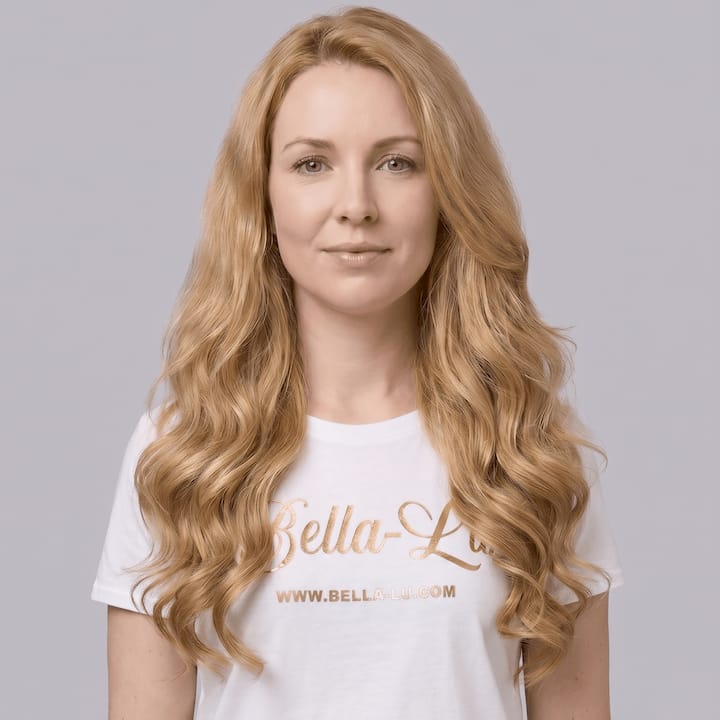
Genius Wefts are the long-term, salon-installed option. Choose wefts over tape or clips when you’re committing to a length for months at a time, especially past 22 inches, since a professional install distributes weight more evenly across the head than adhesive tape rows can.
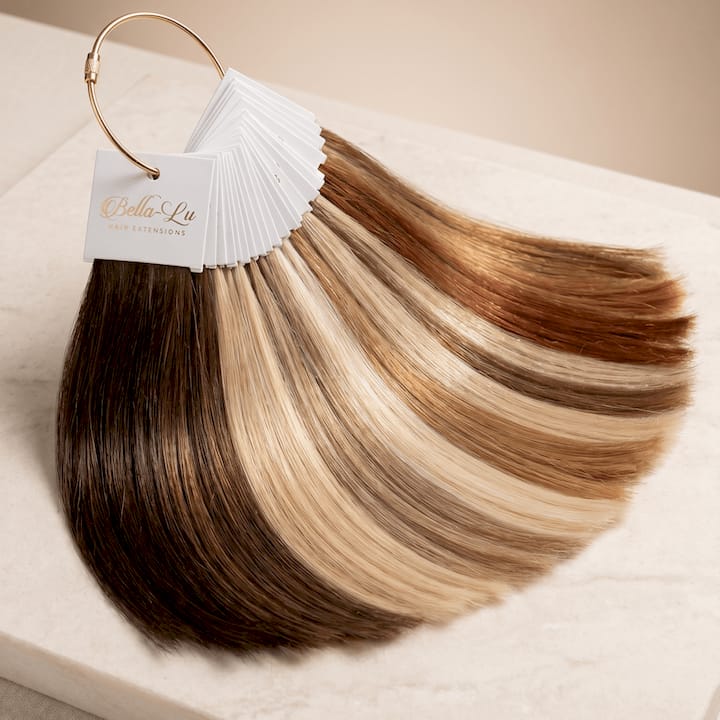
Before ordering any method, check your shade against the Bella-Lu Color Ring rather than trusting a screen photo. Color rings show real hair swatches under different lighting, which is the only reliable way to match a shade before it’s installed.
Recommended Hair Extension Lengths for Different Face Shapes
Face shape shifts which length flatters you most, independent of the height and texture math already covered. The goal is always the same: use length to balance proportions rather than exaggerate them.
Round faces tend to look most balanced with lengths past the chin, ideally 18 inches or longer, since length elongates a round face rather than adding width at the cheeks the way a shorter bob-length extension would.
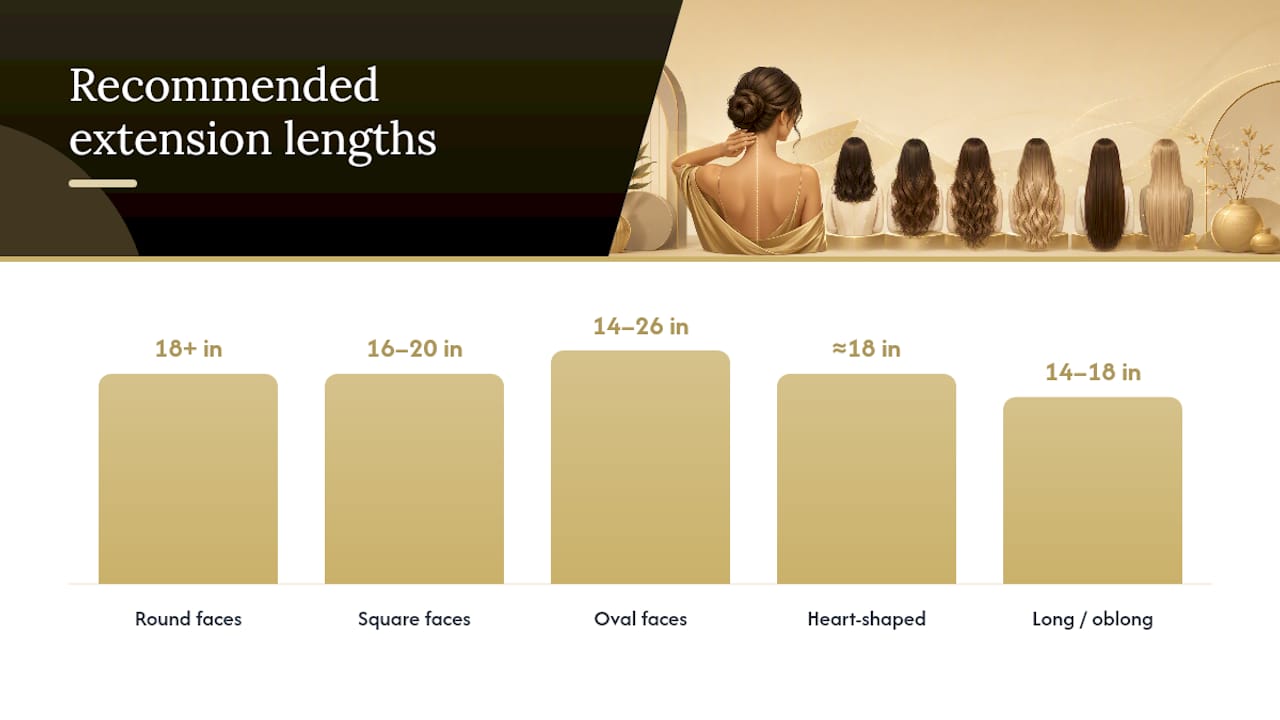
Square faces benefit from soft layers around 16 to 20 inches, particularly with waves added, since movement near the jaw softens strong angles better than blunt, straight-across ends do.
Oval faces are the most flexible shape for extension length. Nearly any length from 14 to 26 inches works, since an oval face doesn’t need length to correct proportion the way rounder or squarer shapes do.
Heart-shaped faces, wider at the forehead and narrower at the chin, look best with lengths starting around 18 inches that add width and weight near the jawline, which balances the narrower chin.
Long or oblong faces often look most proportional with shoulder-grazing to mid-back lengths, roughly 14 to 18 inches, paired with waves or curls, since curl pattern adds width that a longer, straight length would only stretch further.
None of these rules override personal preference. Face shape guidance is a starting point for balance, not a restriction, and plenty of round-faced women wear waist-length hair beautifully once styling and layers are factored in.
Measure First, Then Choose
If there’s one habit that separates a great extension purchase from a disappointing one, it’s measuring before falling in love with a specific inch number. Photos and inspiration boards rarely show height, torso length, or texture, so the “24 inches” that looked perfect on someone else’s frame may land completely differently on yours.
Bring the chart to your stylist, bring your actual tape measurement, and let those two things drive the decision instead of a number you saw online. Extensions chosen this way blend better, last longer without unnecessary trimming, and feel like your hair instead of an obvious add-on.
— Bella-Lu Editors
Find Your Length in the Bella-Lu Collection
Once you know your target inches, the harder part is matching that number to the right application method and shade, not just picking a length off a chart. Bella-Lu built its lineup around exactly that gap: Clip-Ins for testing a length before committing, Tape-Ins for a semi-permanent everyday fit, and Genius Wefts for a salon-installed long-term result.
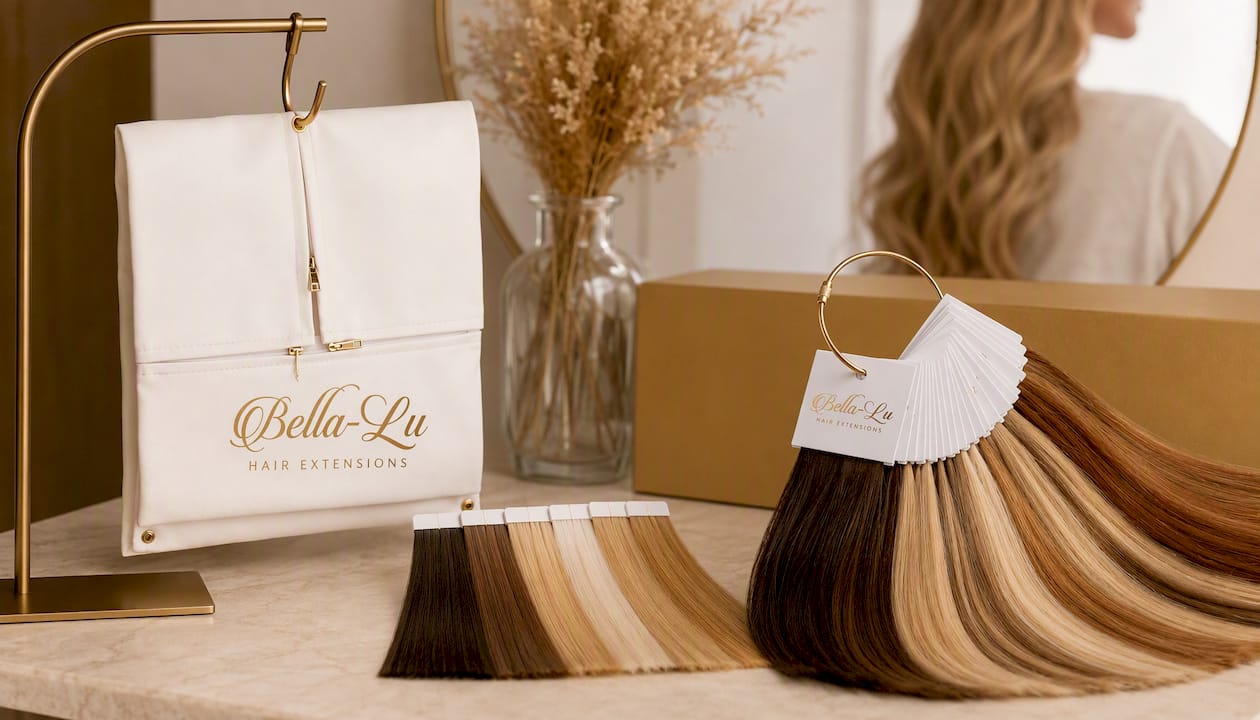
If you’re leaning toward a natural, everyday blend in the 16 to 20 inch sweet spot, the Warm Honey Tape-In is worth a look, especially if your natural color runs warm. Not sure your shade matches what you see on screen? Check it against the Bella-Lu Color Ring before you order, since real swatches under real light beat any photo. And if you’re building a clip-in collection for testing different lengths, a carrier bag keeps your sets tangle-free between wears. Measure your length, check your shade, and order the set that matches both
FAQ
How Do I Know What Length Hair Extensions to Get?
Measure your natural hair from just above the nape to the ends, then match that number to the body landmark you want on the length chart. If you have curls or waves, add 2 to 4 inches to account for shrinkage.
Should I Get 22 or 24 Inch Extensions?
Choose 22 inches if you want a lower-back landmark on an average or petite frame, and 24 inches if you’re taller or want the length to reach closer to the waist. Curly and wavy textures should size up within that range to offset visual shrinkage.
What Is the Typical Length of Hair Extensions?
Most sellers stock lengths between 14 and 26 inches, with 16 to 20 inches being the most popular range because it balances a natural look with manageable upkeep. Beginners are often steered toward 18 inches as a safe middle ground.
What Is the 3-Inch Rule for Hair Length?
There’s no single universal “3-inch rule” in the industry, but a common blending guideline is to keep extensions within about 4 inches of your natural hair length so the transition between your own hair and the extension looks seamless rather than shelf-like.
Should I Buy My Extensions Longer Than I Actually Want?
Yes, buying slightly longer and trimming down is a common professional strategy. A stylist can cut extensions to blend perfectly with your natural layers, but they cannot add length back once it’s cut too short.